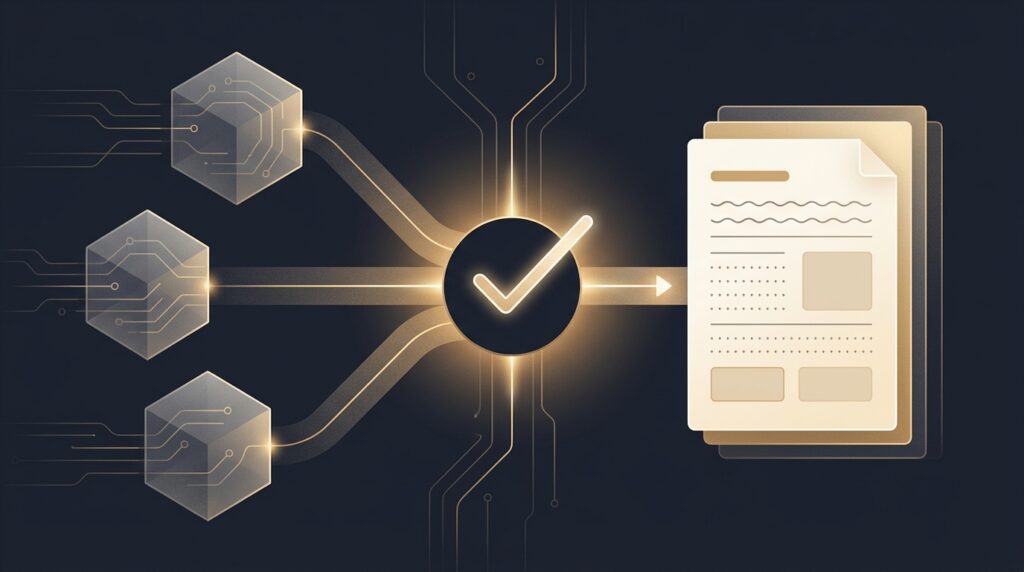
Most plaintiff personal injury firms are not skeptical of AI because they dislike technology. They are skeptical because a bad demand package can create real case risk: misstated treatment chronology, unsupported damages arguments, sloppy privilege practices, or a letter that reads like it was assembled by someone who never negotiated with an adjuster.
That skepticism is healthy. The problem is that many firms stop at the wrong conclusion: “AI is either dangerous hype or a magic shortcut.” The more useful question is narrower: where can AI reduce repetitive drafting work without taking legal judgment away from the attorney?
Misconception 1: AI is supposed to replace attorney judgment
The fastest way to lose a PI attorney’s trust is to suggest that AI can “handle the case.” It cannot. A plaintiff’s lawyer still decides liability theory, damages strategy, negotiation posture, evidentiary framing, and whether a demand should go out at all. AI is not the principal. It is a drafting and organization layer.
In practical terms, that means a useful PI-focused AI tool should help the attorney move from source documents to a reviewable draft faster. It should not decide that a low-speed impact case is worth a particular number, invent a future-care narrative, or treat every soft-tissue file like a policy-limits case. The attorney’s work is still the work: weighing treatment gaps, explaining causation, deciding how hard to press on general damages, and choosing what to omit.
For example, a demand letter for a 34-year-old plaintiff with cervical strain, imaging that does not show acute fracture, and roughly $18,000 in medical charges needs judgment. The letter may need to address MIST-style defenses, delayed treatment arguments, and whether the billing pattern will draw an adjuster’s attention. AI can help organize the chronology and assemble a first draft, but the attorney decides the theme and edits the argument.
Misconception 2: Any generic legal AI tool can handle plaintiff PI work
“Legal AI” is too broad a category to be operationally useful. A tool built for contract review, deposition summaries, or enterprise knowledge management is not automatically good at plaintiff PI demand letters. Demand drafting has its own workflow: intake facts, liability support, medical records, billing, liens, prior injuries, treatment gaps, insurance context, and the firm’s preferred tone.
That is why PI firms should evaluate AI tools by workflow fit, not by model buzzwords. Can the tool distinguish a medical chronology from a damages narrative? Can it keep a demand letter structured around liability, injuries, treatment, bills, and settlement posture? Can it help a paralegal or case manager prepare a draft without turning the attorney review process into a cleanup project?
Legal Power AI’s demand-letter workflow is built around this narrower use case: plaintiff PI teams that need demand letters drafted from case materials, then reviewed by the responsible attorney before anything leaves the firm.
Misconception 3: AI makes compliance someone else’s problem
AI does not make HIPAA, privilege, work product, or confidentiality less important. If anything, it makes the firm’s data-handling process more visible. PI demand work often includes medical records, bills, dates of service, diagnostic history, prior injuries, and sensitive client facts. Those materials should not be dropped into random consumer AI tools or unmanaged accounts.
For plaintiff firms, the threshold questions are straightforward:
- What information is being uploaded?
- Which vendors process it?
- Is the tool using HIPAA-eligible infrastructure where PHI may be involved?
- Is there a business associate agreement where one is needed?
- Who at the firm reviews the final work product before it is sent?
Those questions are not “anti-AI.” They are basic professional controls. Legal Power AI is built around attorney review and vendor safeguards, including BAAs from OpenAI and Anthropic for HIPAA-eligible processing. That does not remove the attorney’s duty to verify accuracy. It does mean the firm should treat AI-assisted drafting as a controlled workflow, not an experiment in a browser tab.
For a deeper compliance-focused discussion, see AI Demand Letter Tools and HIPAA: What Plaintiff PI Firms Need to Know.
Misconception 4: Faster drafting means weaker demands
Speed is not the same as carelessness. In many PI firms, the bottleneck is not legal brilliance; it is document assembly. A case manager may spend hours pulling treatment dates, matching bills to providers, summarizing records, and converting scattered notes into something the attorney can review. If that work takes too long, demands sit. Cases age. Follow-up gets delayed. The attorney is forced to choose between drafting from scratch or cleaning up a rushed letter.
A better AI workflow should compress the repetitive assembly phase while preserving attorney review. The output should be a draft that a lawyer can edit, not a document the firm blindly trusts. Done correctly, that can improve consistency: the same categories are checked, the same chronology gaps are surfaced, and the same CTA-style settlement posture is avoided unless the lawyer intentionally chooses it.
The important distinction is quality control. AI-assisted drafting should produce a structured first version. It should not create unsupported facts, cite nonexistent records, or use settlement language that the attorney would not stand behind. A useful system makes review easier by preserving a clean trail from input materials to draft sections.
Misconception 5: AI only helps high-volume settlement mills
High-volume firms feel the demand-letter bottleneck more visibly, but they are not the only firms that benefit. Solo and small PI firms often have the same problem with fewer staff: one attorney, one paralegal, too many records, and too many cases waiting for the demand stage. A mid-size firm may have enough staff but inconsistent drafting standards across teams.
The use case is not “replace staff.” The use case is standardize the handoff. If the intake notes, medical records, bills, and liability materials can be turned into a cleaner first draft, the attorney can spend more time on strategy: whether the demand should emphasize liability, injury severity, future care, treatment consistency, or a particular carrier’s likely objection.
That matters in everyday files. A rear-end collision with conservative treatment may need a tight, credible causation narrative. A premises case may need more focus on notice, incident reporting, and comparative fault. A UIM claim may need policy framing and careful distinction between the tortfeasor demand and the first-party carrier demand. AI is useful only when it respects those differences.
A practical evaluation framework for PI firms
Before adopting an AI demand-letter tool, a plaintiff firm should test it against a real internal workflow, not a demo prompt. A practical review can be simple:
- Pick one closed or sanitized sample matter. Remove real identifiers if the tool has not been approved for PHI.
- Upload the same records your team actually uses. Do not judge a workflow based on a perfect one-page summary.
- Compare draft structure, not just prose. Look at chronology, liability framing, damages categories, and omissions.
- Track attorney review time. The question is not whether the first draft is perfect; it is whether it gets the attorney to a better review point faster.
- Check compliance controls. Confirm data handling, vendor posture, and who owns final accuracy.
This keeps the evaluation grounded. A tool that sounds impressive in a product demo may still fail when the records include duplicate bills, a treatment gap, unclear causation, or a file that needs a restrained demand rather than aggressive language.
How Legal Power AI fits
Legal Power AI is designed for plaintiff PI firms that want a controlled demand-letter drafting workflow: organize case materials, generate a structured draft, and keep attorney review at the center. The goal is not to automate legal judgment. The goal is to reduce repetitive drafting friction so the attorney can spend more time on case strategy, negotiation posture, and final accuracy.
The better question is not “AI or no AI”
Plaintiff PI firms do not need to choose between ignoring AI and trusting it blindly. The better standard is operational: does the tool fit the firm’s demand-letter process, protect sensitive case materials, preserve attorney judgment, and make review faster without creating new risk?
That is where the category is heading. The firms that benefit will not be the ones chasing generic AI hype. They will be the firms that apply AI to a narrow, repetitive, document-heavy workflow and keep the lawyer responsible for the final work product.
See the workflow, not the hype
Built by personal-injury attorneys, for personal-injury attorneys. See how Legal Power AI turns case materials into attorney-reviewable demand letter drafts.