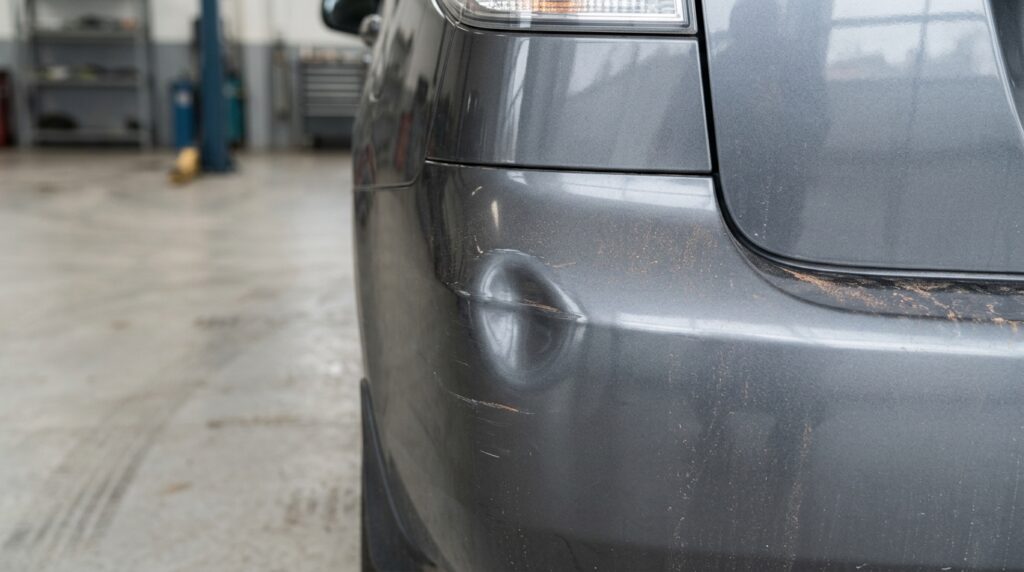
A minor-looking bumper repair can become the carrier’s entire causation theory. In a MIST claim, the adjuster may treat repair cost, photographs, and injury severity as if they are interchangeable measures—even when the file contains a documented mechanism, timely complaints, and a coherent treatment history.
The answer is not louder advocacy. It is a pre-demand workflow that separates what the property evidence proves, what it does not prove, and what additional support the attorney needs before presenting medical causation.
Why MIST files break down before the demand is drafted
“Minor impact soft tissue” is a claims-handling label, not a medical diagnosis or a substitute for California’s causation standard. CACI No. 430 asks whether the defendant’s conduct was a substantial factor in causing harm. A repair estimate may be relevant to the event, but it does not independently answer that question.
The practical problem is that many plaintiff files reach demand drafting with three separate stories:
- The property story: a few exterior photographs, a repair estimate, and perhaps no documentation of hidden damage.
- The client story: a remembered direction of force, body movement, immediate symptoms, and changes over the following hours or days.
- The medical story: intake history, examination findings, diagnoses, treatment progression, and provider opinions recorded at different times.
If those stories are not reconciled early, the demand may overstate the photographs, ignore an inconsistency in the mechanism, or make a medical inference that belongs to a qualified witness. The carrier then gets to define the file as “low damage equals no injury” before the attorney has framed the actual evidentiary question.
That risk is especially high when photographs show only one angle, the estimate reflects cosmetic labor without teardown findings, prior damage is visible, or the client’s description changes between intake and treatment records. None of those facts automatically defeats the claim. Each one does require investigation and deliberate treatment in the demand.
Build the property-damage record before writing the injury narrative
The strongest workflow starts with source control, not prose. The attorney should be able to identify where each property fact came from and whether the source is complete.
Preserve the original visual record
Collect original-resolution photographs and videos when available, not only compressed images copied from a text thread or PDF. Preserve views of both vehicles, the points of contact, final resting positions when documented, the surrounding roadway, and any displaced or transferred material. Confirm when the images were taken and who took them.
A close photograph can make a shallow scuff look dramatic; a distant photograph can erase panel deformation. Multiple angles help the reviewer distinguish paint transfer, bumper-cover distortion, panel gaps, broken fasteners, and unrelated prior marks. The demand should describe what the images show without assigning biomechanical meaning that the images cannot support.
Read the estimate as a repair document—not an injury opinion
Separate parts, labor, paint operations, scans, alignments, supplements, and teardown findings. Note whether the estimate was preliminary, whether repairs were completed, and whether a later supplement changed the scope. A low initial estimate may reflect what was visible before disassembly; a higher estimate does not itself prove a particular occupant force.
Where the record warrants it, obtain invoices, supplement sheets, total-loss documentation, tow records, scene photographs, body-shop images, and the adverse vehicle’s materials. The point is completeness. Do not turn a routine MIST file into an expensive reconstruction exercise unless the disputed facts and likely value justify it.
Map the direction of force to the client’s account
Document seating position, restraint use, head position, whether the vehicle was moving or stopped, the sequence of impacts, and the body movement the client actually remembers. Compare that account with the police report, recorded statement, intake notes, and earliest medical history.
When sources conflict, flag the conflict instead of smoothing it over. A drafting system can organize the discrepancies, but the attorney must decide whether the difference is immaterial, explainable, or serious enough to require follow-up. That discipline is part of a broader causation analysis connecting mechanism, treatment history, and damages.
Keep property evidence and medical causation in their proper lanes
A useful demand distinguishes three propositions:
- What happened: the collision sequence and points of contact supported by admissible sources.
- What the client experienced: the reported movement, symptom onset, functional limitations, and progression.
- What the medical record supports: examination findings, diagnoses, treatment, response, prognosis, and any provider causation opinion.
Those propositions can reinforce each other without being collapsed into one. For example, the demand can accurately state that photographs show limited exterior deformation, the client reported a particular movement and symptom onset, and treating records documented specified complaints and findings. It should not claim that a bumper photograph scientifically proves the diagnosed condition.
The same restraint applies to technical material. Event data, crush analysis, delta-v estimates, or biomechanical opinions may matter in selected cases. When technical interpretation is necessary, California Evidence Code section 801 governs expert opinion based on subject matter sufficiently beyond common experience. Attorneys should not present software-generated physics language as expert analysis or use a generic threshold to declare that an injury could—or could not—occur.
Medical accuracy matters just as much. The attorney should verify that the demand does not attribute findings to the wrong visit, convert a patient complaint into an objective finding, omit relevant prior history, or state a prognosis the provider never gave. Property evidence should frame the collision; the medical record and qualified opinions must carry the medical propositions.
A practical pre-demand checklist for MIST claims
Before drafting, assign one person to create a short evidence map. It can fit on a single review page if the underlying documents are well organized.
- Inventory the collision sources. List photographs, videos, estimates, supplements, invoices, police materials, witness information, recorded statements, and adverse-vehicle records. Mark missing items and source dates.
- Identify the carrier’s likely inference. Is the expected argument low repair cost, no visible deformation, delayed symptoms, inconsistent mechanism, degenerative findings, a treatment gap, or some combination?
- Test internal consistency. Compare the client’s account across intake, recorded statements, discovery responses if applicable, and medical histories. Resolve discrepancies that can be resolved; disclose or carefully frame those that cannot.
- Separate observation from opinion. Put observable property facts in one column and medical or technical opinions in another. Confirm that each opinion has an appropriate source.
- Connect treatment to the disputed issue. Verify symptom onset, earliest documented complaints, examination findings, course of care, treatment gaps, prior similar complaints, and provider causation language.
- Decide what not to claim. Remove unsupported accident reconstruction, biomechanical conclusions, exaggerated adjectives, and any suggestion that repair dollars mechanically determine injury severity.
- Draft for auditability. Make important statements traceable to a photograph, estimate line item, report, or medical record so attorney review does not become a second investigation.
This checklist also helps the firm decide whether the file is demand-ready. Sometimes the correct outcome is to pause drafting, request a missing supplement, clarify the client’s account, or obtain the appropriate medical support. Finding that gap before the demand goes out is more useful than producing polished prose around an incomplete theory.
How Legal Power AI fits
Legal Power AI can help plaintiff firms organize collision materials, treatment records, and case-specific issues into a reviewable demand workflow through its PI demand-letter solution. The platform can surface inconsistencies and structure a draft, but the attorney remains responsible for source verification, medical and legal accuracy, expert-dependent conclusions, privilege and work-product decisions, and the final document sent to the carrier.
Conclusion
MIST claims are not strengthened by pretending that limited visible damage is irrelevant. They are strengthened by treating property evidence precisely: preserving the complete record, acknowledging what the images and estimates show, refusing to make unsupported biomechanical leaps, and connecting the client’s account to the medical evidence through attorney-reviewed sources.
A disciplined pre-demand review makes the carrier’s shorthand less powerful because the file answers the real causation questions before the adjuster raises them. It also tells the firm when more evidence is needed—and when the available record simply does not support a particular argument.
Build a demand workflow that keeps property evidence, medical facts, and attorney judgment aligned.